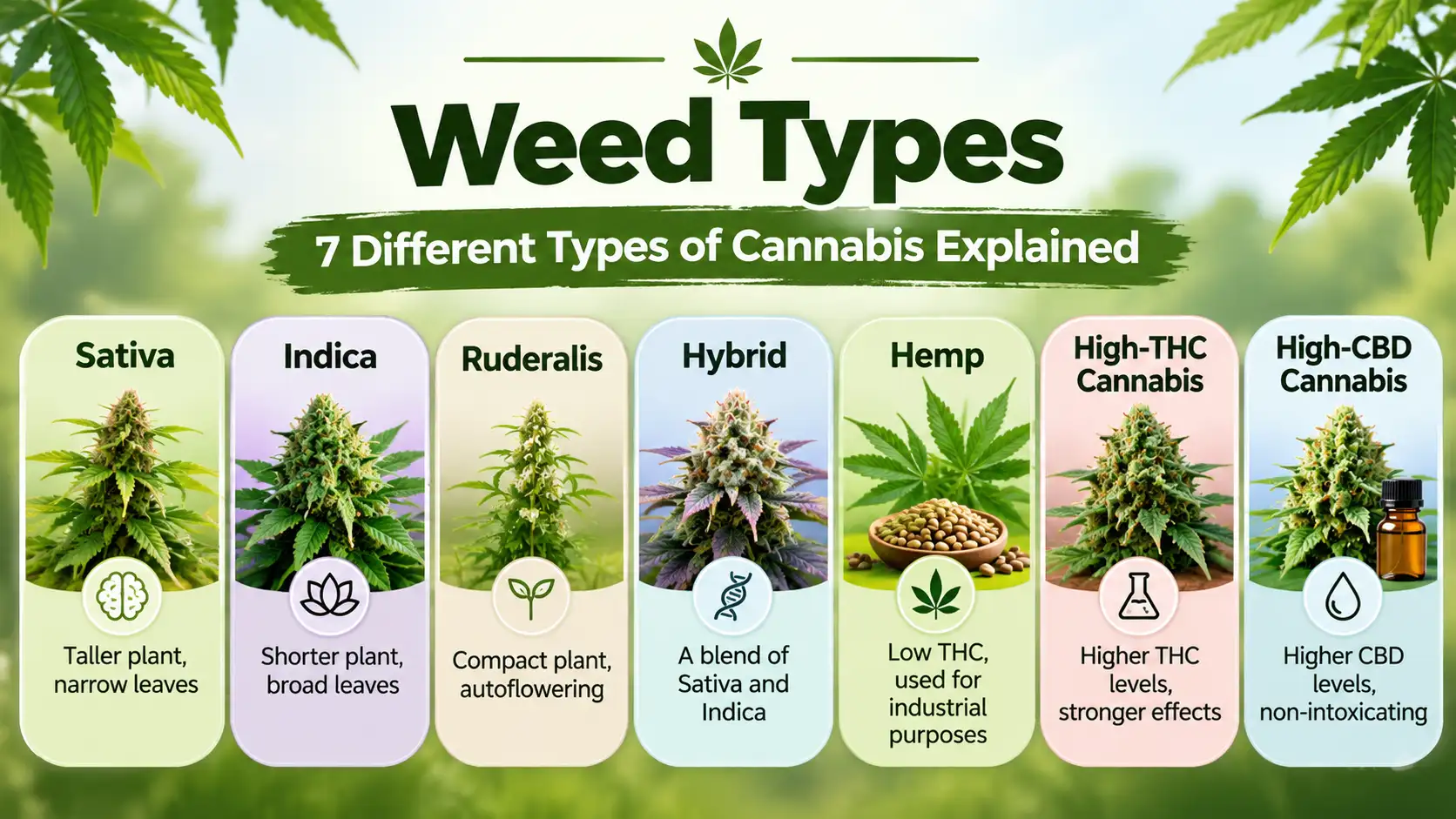

Different Types Of Weed: Understanding Cannabis Classifications
Cannabis, commonly known as weed or marijuana, is a plant that has been used for centuries for industrial, medicinal, and recreational purposes. It contains naturally occurring chemical compounds called cannabinoids, which interact with the human body’s endocannabinoid system. Among these compounds, tetrahydrocannabinol (THC) and cannabidiol (CBD) are two of the most widely studied.
Cannabis comes in all sorts of strains and product forms, each with its own distinct botanical profile, chemical composition and potential effects. Knowing the various types of weed will go some way towards helping you to understand what cannabis is, how it’s classified and the differences between the various types.
Traditionally cannabis has been divided into three main types: Cannabis sativa, Cannabis indica and Cannabis ruderalis. The modern classification of cannabis also takes into account the various hybrids and the differing cannabinoid and terpene profiles.
Cannabis Sativa
Cannabis sativa is one of the most widely recognized cannabis categories. It is traditionally associated with plants that grow tall and have relatively narrow leaves.
Characteristics
- Generally grows taller than wide traditional indica varieties.
- Has narrow, elongated leaflets.
- Often has a relatively longer flowering period.
- Can grow in warm and tropical climates.
- Includes varieties with different THC and CBD concentrations.
Commonly Associated Effects
Sativa-labeled products are traditionally thought of as being the energizing type. The science doesn’t really support that, though. The effect of cannabis is going to be down to the actual chemistry of the product, your own sensitivity to it, and the dose you take. The sativa label on its own doesn’t determine the effect.
Cannabis Indica
Cannabis indica is the one traditionally associated with the short, bushy plant and broad leaves. It’s the one that’s always been talked about in relation to the Cannabis that comes from the South and Central Asian areas.
Characteristics
- Usually has a shorter and bushier growth structure.
- Features broad, dark-green leaves.
- Often has a relatively shorter flowering period.
- Can develop dense flower structures.
- Contains varying concentrations of THC, CBD, and other compounds.
Commonly Associated Effects
Indica-labeled products are frequently marketed as relaxing or calming. Some people will associate them with physical relaxation and a sense of sleepiness. That said, the effect is by no means guaranteed and will be down to the actual cannabinoid and terpene profile of the product.
Cannabis Ruderalis
Cannabis ruderalis is a less commonly discussed cannabis category. It is traditionally associated with regions of Central and Eastern Europe and parts of Asia.
Characteristics
- Generally has a small and compact growth structure.
- Produces relatively smaller leaves.
- Is known for its ability to flower according to plant age rather than relying primarily on changes in daylight.
- Usually contains lower THC levels than widely cultivated varieties.
Importance
Ruderalis is particularly important in cannabis breeding because of its autoflowering characteristic. This trait has been incorporated into hybrid breeding programs to develop varieties with different growth and flowering characteristics.
Hybrid Cannabis
Hybrid cannabis refers to varieties developed by crossing different cannabis genetic lines, traditionally associated with sativa and indica categories.
These varieties are developed to combine selected characteristics from their parent plants.
Characteristics
- May display a combination of physical traits.
- Can have different growth structures and flowering patterns.
- Contains varying THC and CBD concentrations.
- May have different terpene profiles.
- Can be developed for agricultural, research, or commercial purposes.
Common Classifications
Hybrid cannabis is often divided into three broad categories:
- Sativa-dominant Hybrids: Traditionally associated with more sativa-like characteristics.
- Indica-dominant Hybrids: Traditionally associated with more indica-like characteristics.
- Balanced Hybrids: Developed with a combination of characteristics from both genetic lines.
It is important to understand that these classifications do not reliably predict the effects of a cannabis product.
Hemp
Hemp is a type of Cannabis sativa grown for industrial and agricultural use. It’s generally differentiated from drug-type cannabis by its naturally low THC content (though of course the legal definition and permitted THC levels vary from country to country).
Characteristics
- Generally cultivated for its fibers, seeds, and other industrial uses.
- Contains relatively low concentrations of THC in legally defined hemp varieties.
- Can grow in different climatic conditions.
- Has several applications in manufacturing and agriculture.
Common Uses Of Hemp
Hemp has a wide range of industrial applications, including:
- TEXTILES: Hemp fibers are used to manufacture fabrics, ropes, and other textile products.
- FOOD PRODUCTS: Hemp seeds are used in food products and are a source of plant-based protein and healthy fats.
- PAPER PRODUCTION: Hemp fibers can be used in paper manufacturing.
- CONSTRUCTION: Hemp-based materials are used in certain insulation and construction products.
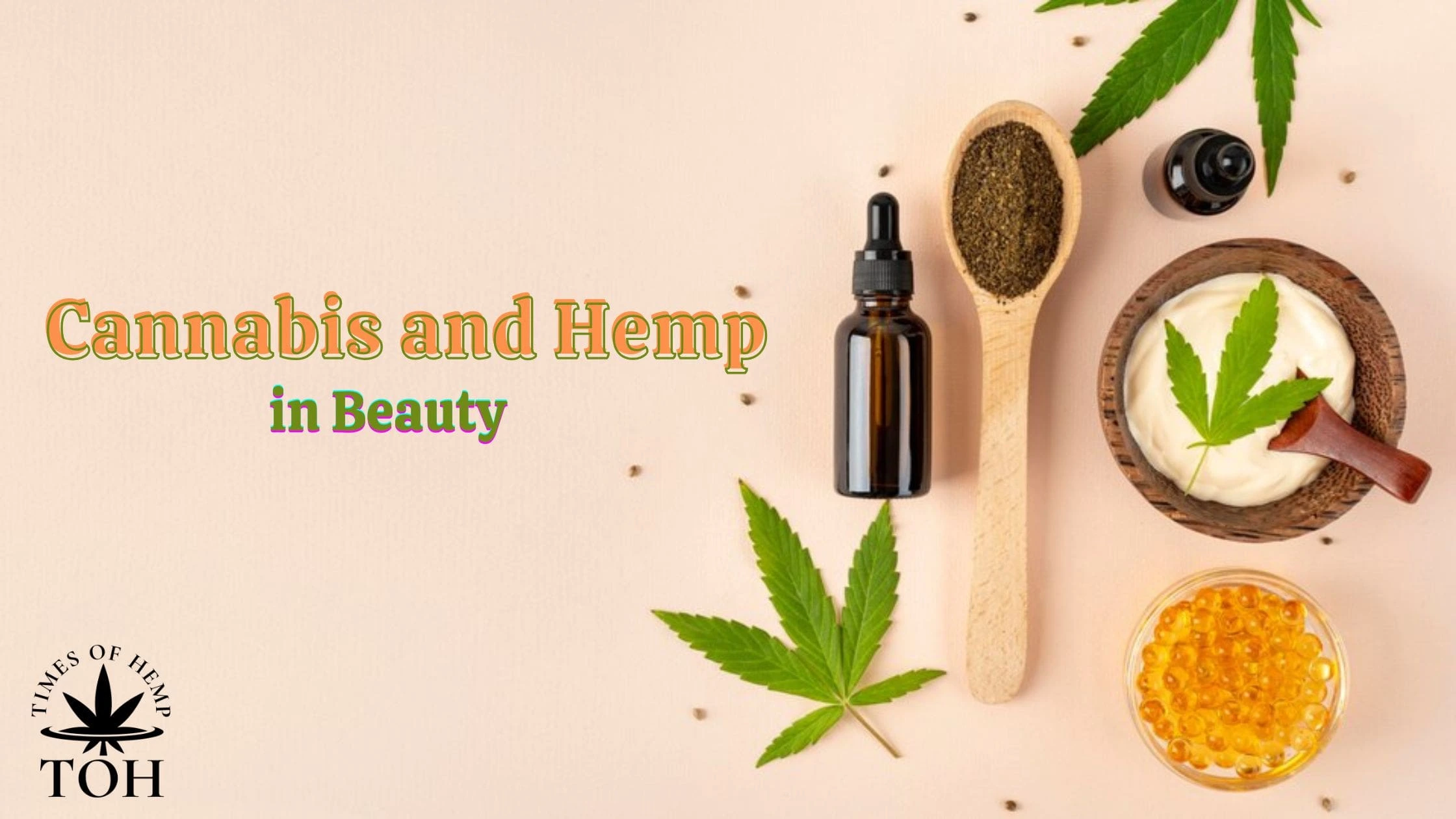
- PERSONAL CARE: Hemp seed oil is used in selected skincare and cosmetic formulations.
High-THC Cannabis
High-THC cannabis refers to cannabis varieties or products containing relatively high concentrations of tetrahydrocannabinol (THC), the primary intoxicating cannabinoid in cannabis.
Characteristics
- Contains higher THC levels than the conventional low-THC types.
- Can produce potent psychoactive effects.
- May be associated with altered perception, impaired coordination, and changes in mood.
- Can increase the probability of adverse effects, especially at higher exposure levels.
Potential Risks
High-THC cannabis can cause anxiety, confusion, impaired memory, and increased heart rate. Frequent use may also increase the risk of cannabis dependence and other mental health concerns in susceptible individuals.
Its effects can vary significantly depending on individual physiology, frequency of use, and product composition.
High-CBD Cannabis
High-CBD cannabis refers to varieties or products containing relatively high concentrations of cannabidiol (CBD), a non-intoxicating cannabinoid found in the cannabis plant.
Unlike THC, CBD does not typically produce the characteristic cannabis intoxication associated with marijuana.
Characteristics
- Contains comparatively higher CBD concentrations.
- Generally has lower THC levels than high-THC products, although this varies.
- Is studied for its potential therapeutic applications.
- Does not typically produce the same intoxicating effects as THC.
Potential Applications
CBD has attracted scientific interest for its potential role in managing certain medical conditions. A purified prescription CBD medicine is approved in some countries for specific forms of epilepsy.
However, evidence for many other advertised health benefits remains limited, and unregulated CBD products may contain inconsistent cannabinoid concentrations or contaminants.
Understanding Cannabinoids And Terpenes
Cannabis contains numerous chemical compounds that contribute to its characteristics.
Cannabinoids
Cannabinoids are naturally occurring compounds that interact with the body’s endocannabinoid system.
Two important examples include:
- THC (Tetrahydrocannabinol): The primary intoxicating cannabinoid responsible for many of the psychoactive effects associated with cannabis.
- CBD (Cannabidiol): A non-intoxicating cannabinoid that is being studied for several potential medical applications.
Other cannabinoids include cannabigerol (CBG) and cannabinol (CBN), which are also subjects of ongoing research.
Terpenes
Terpenes are aromatic compounds responsible for the characteristic smells and flavors of many cannabis varieties. They are also found in numerous other plants.
Common examples are myrcene, limonene, pinene, and linalool. The amounts of these in any given strain will vary, and this is one of the reasons for the differences in smell and chemical profile between strains.
Health Risks And Legal Considerations
Cannabis use can have a number of health implications, particularly where the product contains a high concentration of THC. Potential adverse effects can include impaired attention, poor coordination, anxiety, memory problems and dependence.
Cannabis use can be particularly problematic for adolescents, for pregnant people and for people who are already mentally vulnerable in some way. Smoking cannabis also exposes the lungs to the harmful combustion products.
Legalities vary dramatically from country to country and from region to region. In India, the relevant legislation is the Narcotic Drugs and Psychotropic Substances (NDPS) Act, 1985. There are certain traditional preparations which involve the use of cannabis leaves which are not prohibited under the law (i.e. they are permitted), subject to the relevant provisions of the law and the rules of the state in which they are being used.
Hence, it is absolutely vital to have a sound understanding of the local laws and regulations when you’re talking about cannabis cultivation, possession, distribution, and use.
Conclusion
The seven commonly discussed types of weed represent different botanical categories, breeding classifications, agricultural uses, and cannabinoid profiles. From sativa, indica, and ruderalis to hybrids, hemp, and high-THC or high-CBD varieties, cannabis encompasses a diverse range of plant characteristics and chemical compositions.
Understanding the differences is, of course, very useful in terms of cannabis biology, its industrial applications, agricultural research, and potential health effects. As the research continues to evolve, it’s absolutely vital that we have the right information and that we’re appropriately aware of what we’re dealing with.